
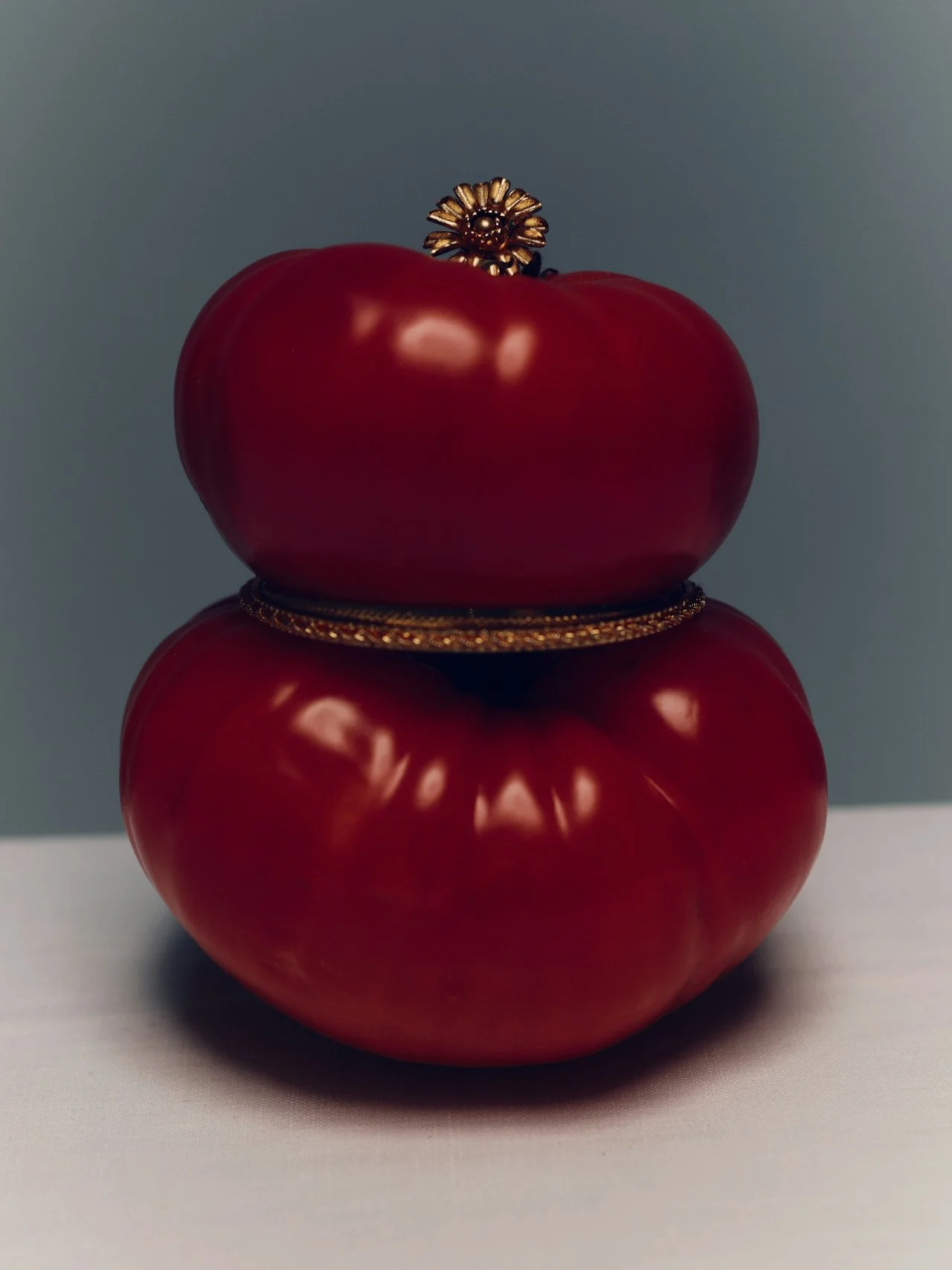
Somewhere along the way, flowers at a table became a convention.
A centerpiece. A finishing touch. Something ordered from a florist to fill the space between the plates and signal that the occasion was worth the effort. Something symmetrical, usually. Something that matched the linens. Something that did not interfere with the sightlines across the table or the business of being at a dinner party.
We have never been interested in that version of flowers.
The flowers we bring to a table are not decoration in any conventional sense of the word. They are not finishing touches. They are not ordered to match. They are — and we mean this with complete sincerity — participants. They are part of the composition, part of the storytelling, part of the atmosphere that forms before the first guest arrives and lingers after the last one leaves.
To understand why, it helps to think about what a flower actually is: a living thing in a specific moment of its life, carrying the particular color and form and fragrance of a season, already in the process of becoming something else. There is nothing static about a flower. And a table that holds something non-static — something that is, however slowly, moving and changing and releasing its scent into the air — is a table that feels alive rather than arranged.
That aliveness is what we are always reaching for.
The Still Life Was Never Still
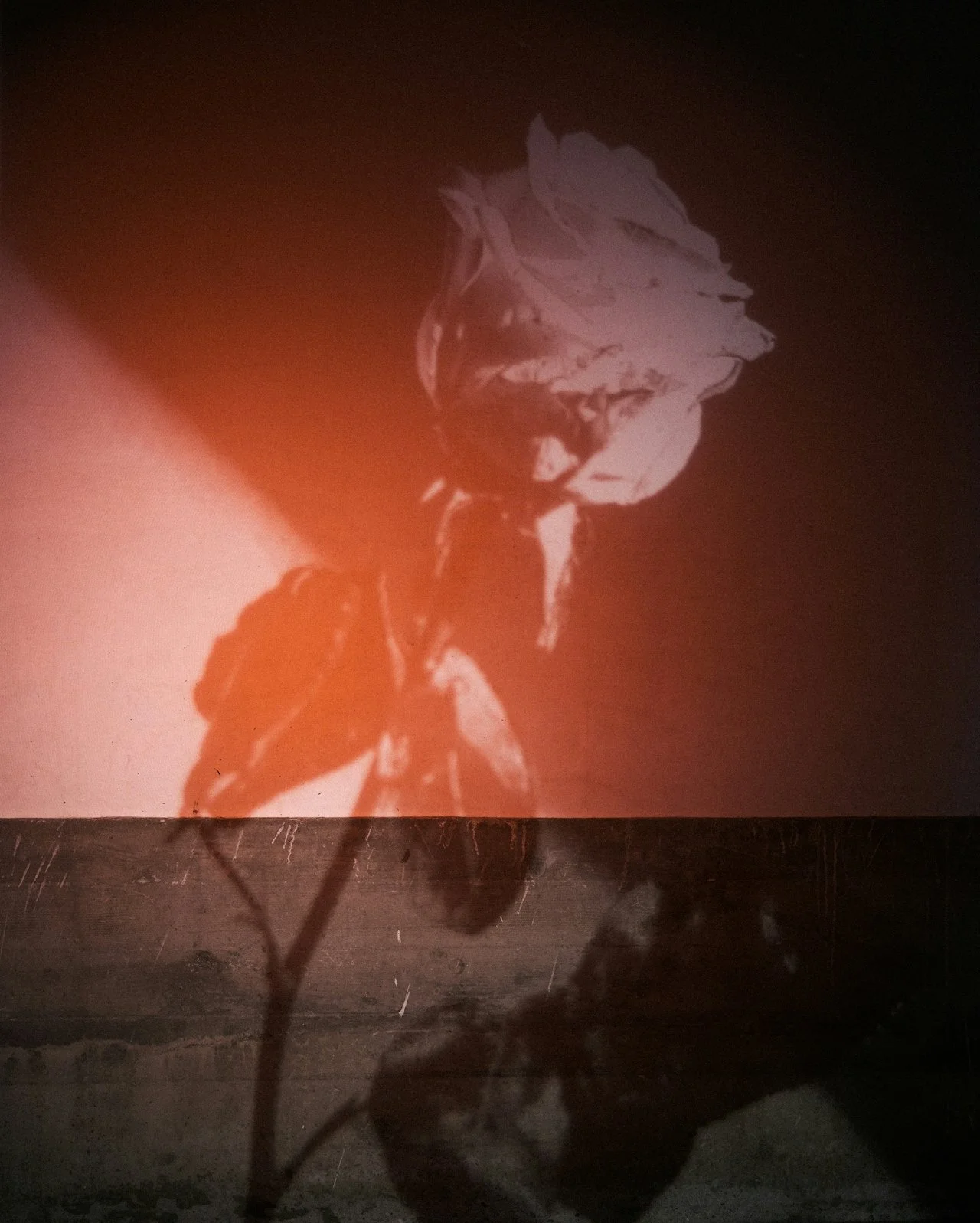
Look at the great Dutch still life paintings — the ones with the overflowing fruit bowls and the dead game birds and the flowers that are always, always beginning to turn. The roses dropping their petals. The peach with the bruise. The fly on the edge of the bread.
These paintings are not about abundance. They are about time. They are about the fact that beautiful things are beautiful precisely because they are temporary — that the flower and the fig and the perfectly arranged feast are all moving, at different speeds, toward their end.
This is what the best tables hold. Not the fantasy of permanent perfection but the reality of a moment — this particular combination of flowers and food and light and people, assembled now, unrepeatable. The slight wilt of a garden rose by the end of a long dinner is not a failure of the arrangement. It is the arrangement doing what arrangements do: existing in time, honestly.
We think about this when we choose flowers for a table. We are not looking for the most architecturally perfect bloom. We are looking for the most alive one — the one whose color is doing something interesting, whose stem has a little movement in it, whose fragrance will reach the guests before they see it and tell them something about where they are before they sit down.
California as a Floral Philosophy
There is a particular quality to the flowers that grow in Southern California that shapes everything we do.
The light here does something specific to color. A dusty rose that would look pale and washed out in softer northern light glows here — it picks up the gold of the afternoon and becomes something warmer, more complex, closer to the color of the inside of a fig than to the pastel it might appear in another landscape. Lavender goes silver in the heat. Eucalyptus turns blue-grey. The whole garden operates in a palette that is simultaneously sun-bleached and intensely saturated, and you cannot replicate that palette with flowers grown somewhere else.
This is why we work seasonally and locally wherever possible. Not as an ethical statement, though there is ethics in it, but as an aesthetic one. A table built with flowers that actually grew in this climate, in this season, in this particular quality of California light, has a coherence that no amount of careful sourcing from a wholesale market can quite achieve. It looks like it belongs here. It looks true.
The flowers we return to most often: garden roses in their more complex varieties — the ones with many petals and colors that shift from center to edge. Ranunculus, which has the architecture of a rose but a papery delicacy that is entirely its own. Sweet peas, which are almost embarrassingly beautiful and smell like something from a dream you cannot quite remember. Dusty miller for its silver, which works with everything. Anemones for their darkness. Dahlias in autumn because nothing else has that particular combination of structural confidence and visual warmth.
And always, always, something unexpected. A single branch of something that does not look like a conventional florist choice. A cutting from a garden that has more to do with texture than flower. Something that makes the arrangement look gathered rather than designed — because gathered is always more interesting than designed.
On Sharing a Surface
The specific challenge of flowers and food sharing a table is one of the more interesting design problems we encounter regularly.
Food has its own visual language — color, texture, the particular beauty of things that have been prepared with skill and presented with intention. A board of cheeses with their different rinds and pastes. A platter of roasted stone fruit still glistening from the oven. A bowl of something green and fresh against the warm tones of everything around it. Food, when it is composed well, does not need embellishment. It is already doing something visually.
The risk of adding flowers is one of two failures: competition or indifference. Flowers that try too hard to assert themselves visually compete with the food for attention and the whole surface becomes busy, restless, exhausting to look at. Flowers that are placed without thought create a kind of visual indifference — they are present but not in conversation, and the surface feels like two separate things that happen to occupy the same space.
What we are looking for is the third thing. The conversation.
A low arrangement of garden roses and trailing herbs that moves along a linen runner toward a board of whipped ricotta and golden beets is in conversation with the food — the colors are related, the scale is considered, the whole surface reads as a single composition rather than food plus flowers. A single stem resting against a stack of ceramic plates is in conversation with the vessels — it is a detail that rewards close looking, that gives the eye somewhere to rest and then something to discover.
The flowers are not separate from the food experience. They are part of its flavor — part of the atmosphere that shapes how the food tastes, because food always tastes of the room it is eaten in.
Fragrance as the First Course
We do not talk enough about how a table smells.
Sight gets all the attention. Color, composition, the visual experience of walking into a room — these are the things that get photographed, described, remembered in the most articulate terms. But fragrance arrives before sight can process anything. You smell the flowers before you see them. You smell the food before you taste it. The nose is the fastest sense, the one most directly wired to memory, the one that can transport a person more completely and more instantly than any visual experience.
A table that smells of garden roses and fresh herbs and something warm from the kitchen is already doing its work before anyone has looked at it properly. It has already begun to place the guest somewhere specific — a garden, a kitchen, a memory, a version of comfort that is older than any conscious association.
We think about this when we choose flowers, and we think about it when we design the relationship between the florals and the food. A heavy floral fragrance next to delicate food is the wrong choice — the scent overwhelms the taste and the guest spends the meal in a kind of olfactory competition. A light floral fragrance next to bold, complex food is exactly right — the scent adds a layer to the experience without competing with it. Sweet peas near a summer table. Ranunculus, which is nearly scentless, near a table where the food fragrance should lead. A branch of fresh rosemary near anything that wants to smell of the garden it came from.
This is the full sensory composition of a table: what it looks like, what it smells like, what it feels like to touch the linen and the ceramic, what it sounds like when the room is full of people who have been made comfortable by all of the above.
The Photograph and the Thing Itself
Tables like ours get photographed. We know this. We design with a camera in mind the way a set designer designs with an audience in mind — not as the primary intention but as a reality to be worked with rather than ignored.
But the photograph is never the point.
The photograph captures the light on the roses and the color of the cheese and the way the whole surface looks at the moment before the guests arrive, which is actually the least interesting moment — the moment before the table becomes what a table is for. The point is what happens after the photograph, when the guests sit down and reach for things and the arrangement begins its beautiful degradation into a meal that was actually eaten, flowers that were actually in the room with real people, food that was actually tasted and discussed and passed and finished.
A table that photographs well but does not feel like anything in person is a set, not a table. We are not in the business of sets.
We are in the business of rooms that feel like something. Tables that do something. Flowers and food that together create an atmosphere so specific and so considered that the guest carries it home in their body — not as a memory of a photograph they took, but as the memory of a feeling they had, sitting at a table in a particular quality of California light, surrounded by the scent of garden roses and the warmth of food that was made for them.
That is what flora on the table is for.
Not decoration. Never decoration.
Feast with Fiore designs floral-infused food experiences and tablescapes throughout Los Angeles — for private dinners, brand events, retreat dining, and celebrations of every kind.