
Food as Cinema: Why the Best Events Are Remembered Through the Table
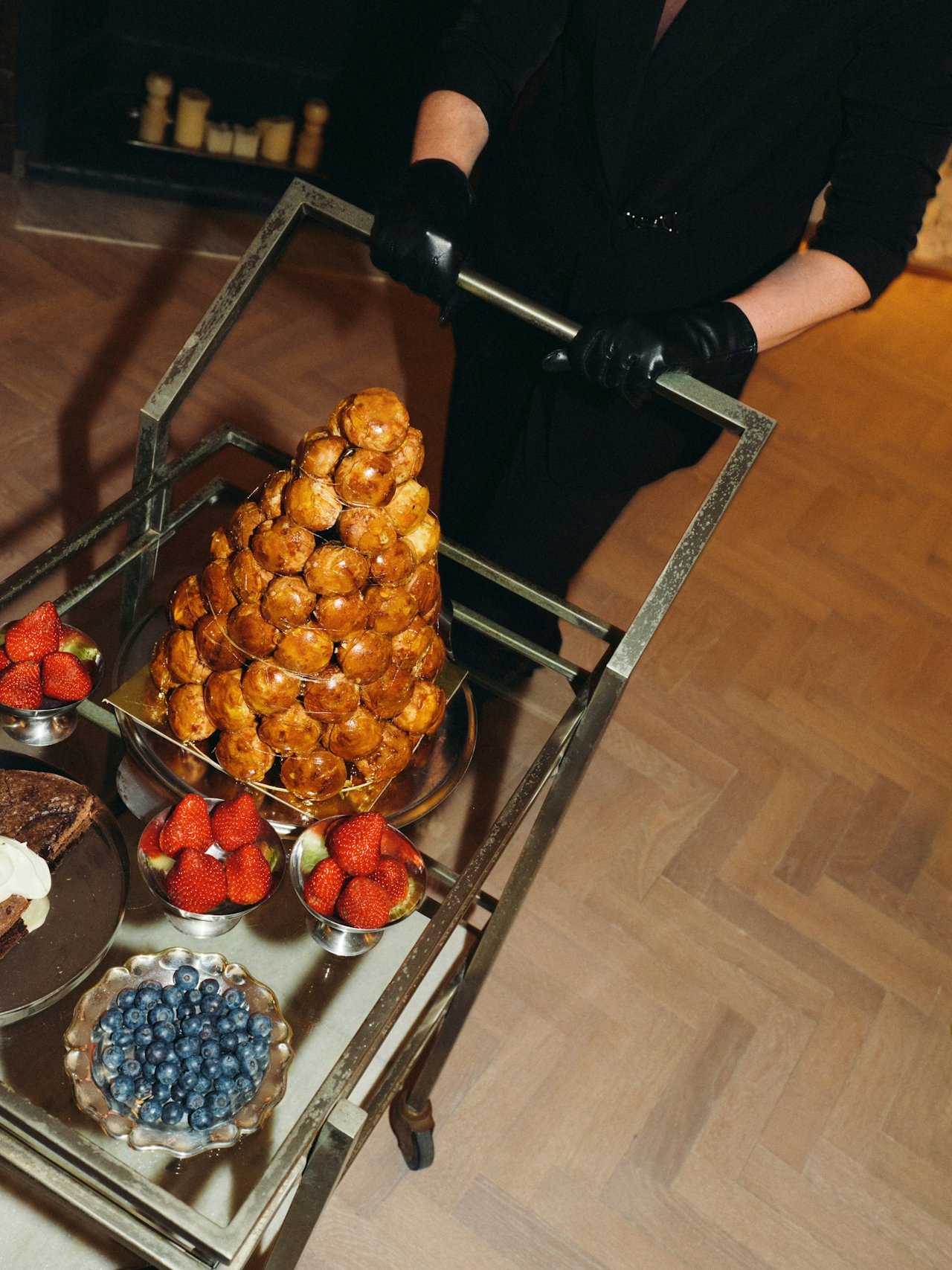
There is a scene in almost every great film where the table says everything.
A long linen-draped surface covered in half-melted candles and the remnants of a feast that went too late into the night. Or a single breakfast spread — soft light, a carafe of orange juice, something warm in a ceramic bowl — that tells you exactly who these people are to each other without a single word of dialogue. Directors know what hosts have always known: the table is not background. The table is language.
We have been thinking about this for a long time. Not in an academic way, but in the way you think about something you've watched happen again and again and can no longer ignore. Guests arrive at an event with every intention of taking it all in — the florals, the venue, the lighting, the music. And then the food appears. And the room shifts. And years later, when they are trying to recall the details of that afternoon or evening, what they return to is not the room. It is the table. The way it smelled. The way it looked. The way it made them feel, for a moment, like the world had been arranged specifically for them.
This is not an accident. This is design.
The Atmosphere Before the First Bite
Long before anyone reaches for a plate, the table has already begun its work.
Think about the last breakfast spread that stopped you in your tracks. Not a buffet line. Not a hotel setup with chafing dishes. But a real breakfast table — the kind that looks like someone who genuinely loves mornings built it with intention. Ceramic bowls of granola with dried rose petals pressed into the top. Figs split open on a wooden board next to a honey jar that has been drizzled just so. Seasonal fruit arranged not by category but by color, so the whole surface moves from gold into blush into deep burgundy like a California sunrise you almost missed.
Before you taste anything, you have already had an experience. You have already received a message about what kind of afternoon this is going to be, about who is hosting you and how seriously they take the act of feeding people.
This is what we mean when we say food is atmosphere. The physical arrangement of a table — its vessels, its textures, its flowers, its negative space — creates an emotional climate before a single dish is passed. The right ceramics on a retreat dining table say slow down, you are allowed to be here. A chef station with open flames and fresh herbs and a cook who works with focused, quiet precision says something real is happening in this room. A pastry display that looks like it was designed by someone who studied both patisserie and still life painting says this gathering takes beauty seriously.
The food tells the story. But the table tells it first.
On Flowers, Vessels, and the Art of the Edible Still Life
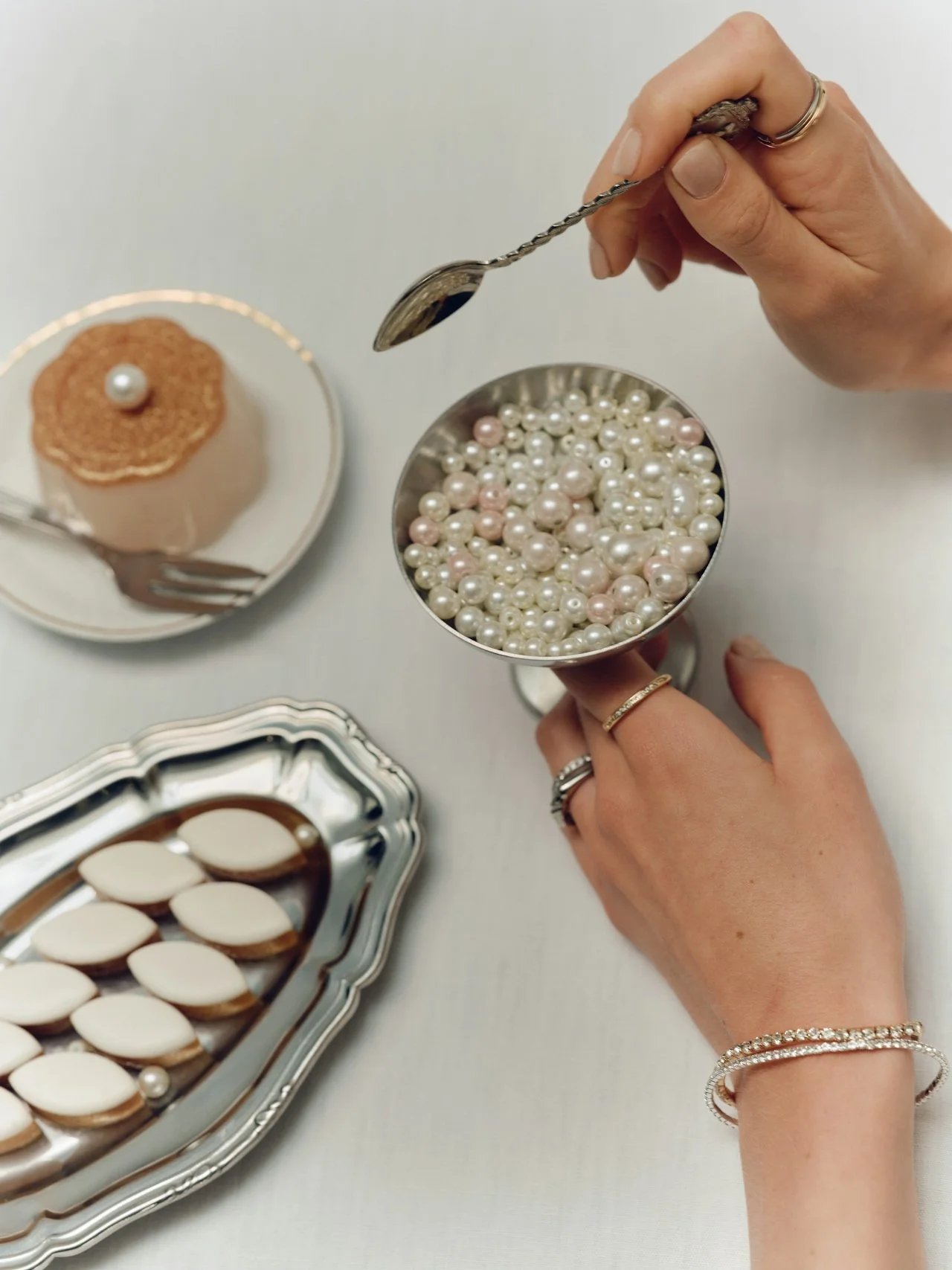
There is a particular kind of magic that happens when flowers and food occupy the same surface without either one competing for dominance.
It requires restraint and confidence in equal measure. Florals that are too sculptural overwhelm the food. Food that is too architectural ignores the flowers. But when the two are in conversation — when a low arrangement of garden roses and dusty miller spills across a linen runner toward a board of whipped ricotta and golden beets, when a single stem of sweet pea leans against a stack of handmade plates — the effect is something closer to a painting than a party.
We think about vessels the way a costume designer thinks about fabric. The container is part of the content. A sushi experience served on deep-glazed ceramic in unexpected shapes communicates something entirely different from the same fish presented on cold slate or pale wood. Each choice is a tonal decision. Each choice is editorial. A terracotta bowl of roasted peppers with a torn piece of bread resting on its edge is not just food — it is a soft argument for slowing down, for eating the way people eat when they actually love each other.
Texture does the same work. The rough edge of a hand-torn focaccia next to the cool smoothness of a marble surface. The matte finish of a linen napkin against the gloss of lacquered chopsticks. Crumble against cream. Wild against refined. These contrasts are not accidental in the spaces we create. They are the visual equivalent of a chord — individual notes that only become music in relationship to each other.
Storytelling at the Family Table
There is something that happens at a family-style gathering that almost nothing else can replicate.
When dishes are passed rather than plated, the meal becomes a negotiation, a conversation, a small act of daily democracy. Someone reaches across for the bread. Someone holds the bowl steady while another spoons from it. Eye contact happens over the transfer of something warm. This is ancient. This is the original social technology.
The most affecting family-style tables we have built — for private chef experiences, for creative industry events, for intimate retreats — have all shared the same quality: they created the conditions for people to turn toward each other. The food gave them something to do with their hands and their attention while the real thing, the connection, happened underneath.
In Los Angeles, where so much gathering happens at arm's length, behind menus and professional service and the performance of effortless cool, there is a deep hunger for tables that ask something different of their guests. Tables that say: be here. Pass this. Try that. Tell me what you think.
This is experiential hospitality in the truest sense — not a production that guests observe, but a world they step into and begin to inhabit.
Celebration Tables and the Weight of Memory
Of all the events we have the privilege of designing for, celebration of life gatherings ask the most of the table.
When someone is being honored — when grief and love and memory are all present in the same room — food carries an almost unbearable tenderness. People bring their favorite dishes. Families recreate the recipes of someone gone. A table becomes a portrait.
We approach these events with a particular kind of stillness. The florals are softer. The abundance is quieter. The goal is not spectacle but sanctuary — a table that says you are held here, your love is visible here, the person you are missing would have wanted this beauty for you.
The guests at these gatherings remember the table for years. They remember the specific flowers. The particular color of a cloth. The way a dish they associated entirely with one person suddenly appeared in the center of a room full of people who also loved them. Memory works through the senses first. The table is where grief becomes, for a few hours, a form of celebration.
Brands, Retreats, and the Intelligence of Beautiful Hospitality
Something is shifting in how brands and organizations think about gathering.
The executive off-site that is just conference tables and catering trays feels increasingly like a missed opportunity — not because it lacks sophistication, but because it misunderstands the actual purpose of bringing people together. You do not fly a team to a beautiful location and feed them mediocre food and expect transformation to happen. The table is part of the work.
The brands and creative studios and retreat organizers who have arrived at a more intentional approach to hospitality have figured something out: how you feed people communicates what you believe about them. A breakfast that was clearly considered — that features local fruit and interesting pastries and a chef station where someone is making something fresh and warm — tells your guests that their presence matters, that this gathering was taken seriously from the first cup of coffee.
Food installations throughout Los Angeles have become a language for this kind of brand storytelling. A curated table at a product launch or an editorial dinner is not decoration. It is positioning. It is the brand made edible, made sensory, made real in a way that a slide deck or a logo never quite can be.
The Private Chef, the Ritual, and the Guest Who Stays Late
There is a particular guest at almost every private chef experience. You know this guest. They are the one still at the table long after the meal has technically ended. They are nursing the last of the wine, or picking at the cheese, or just sitting with their hands wrapped around a warm cup, unwilling to let the evening close.
This guest is not being polite. This guest is being honest. They have been fed in a way that is about more than nutrition. They have been inside a world that was built for them — the right light, the right vessel, the right combination of tastes and textures and beauty, the right pace, the presence of a cook who worked with love and focus. And they are not ready to leave that world yet.
We think about this guest when we plan every experience. We are working, always, toward that moment when someone looks up from a table and realizes they are exactly where they want to be.
What We Are Really Building
We are not in the business of food as product delivery. We are in the business of food as experience — as memory, as atmosphere, as storytelling, as the thing guests carry home in their bodies and their conversations and their photographs and, most powerfully, in the quiet residue of feeling that stays long after the plates are cleared.
The table is a cinema. The food is the film. And the guests, for the duration of the meal, are living inside a world that was built — detail by detail, flower by flower, vessel by vessel, bite by bite — to make them feel something true.
That is what we do. That is all we do.
And we have never found a better reason to come to work.
Feast with Fiore creates cinematic food experiences throughout Los Angeles — from private chef dinners and retreat dining to food installations, celebration of life gatherings, and creative industry events. Every table is built to be felt.